
Why Seller Credits Beat Price Discounts for Bryan/College Station Real Estate Investors
Discover why real estate investors in Bryan/College Station should prioritize seller credits over price discounts to reduce upfront cash out of pocket, lower risk, and maximize returns.

Greg Schwartz
October 16, 2026
Why Seller Credits Beat Price Discounts for Bryan/College Station Real Estate Investors
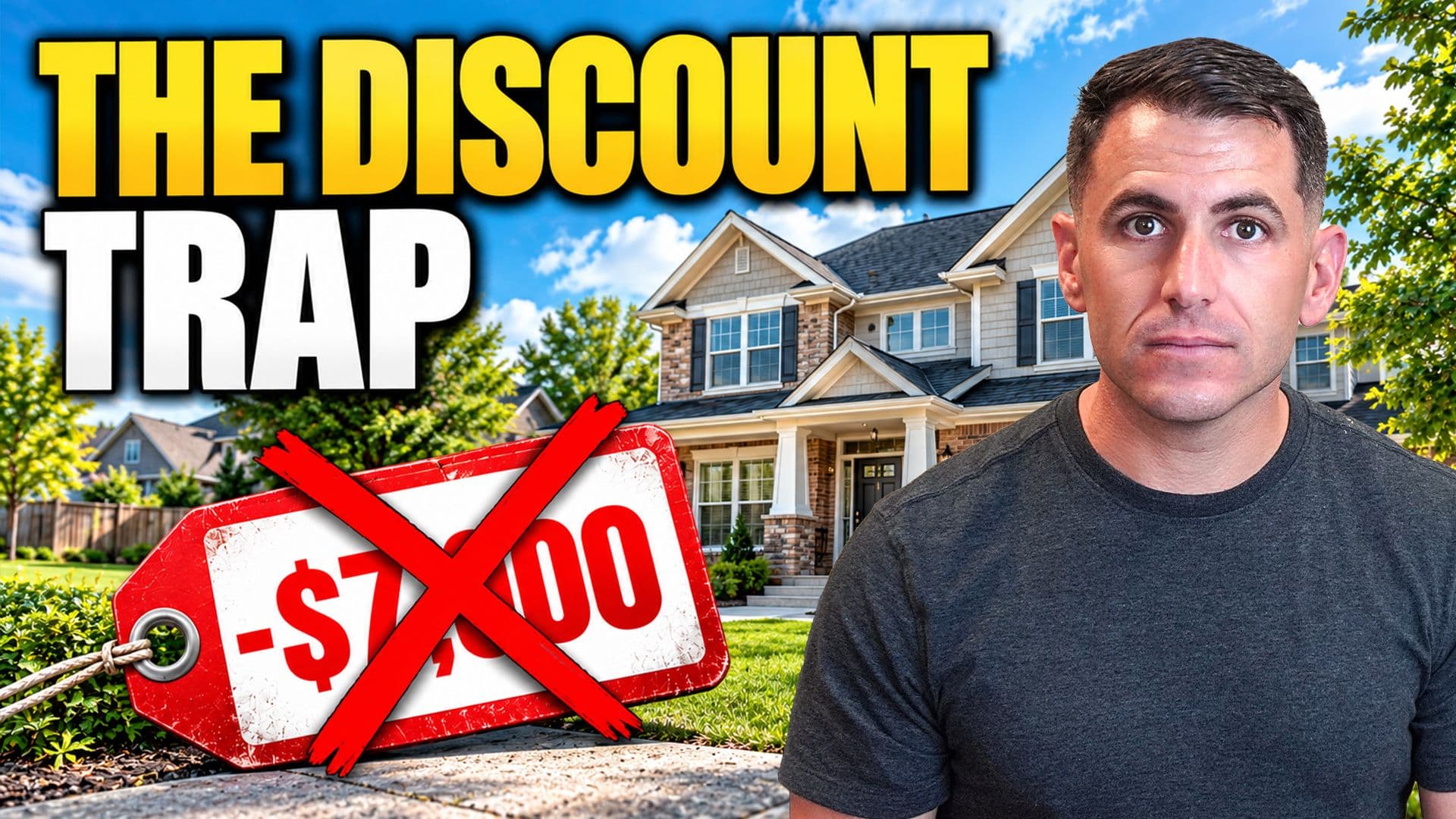
Real estate investors love negotiating for price discounts. It feels real good to close a house $5,000, $10,000, or $20,000 under the asking price. But honestly? Those investors are shooting themselves in the foot.
The math says that you should focus your negotiations on seller credits instead.
If you don't believe me, I'm about to break down the exact math behind this decision. My name is Greg Schwartz. As a local agent who helps real estate investors right here in Bryan and College Station, I've helped clients buy hundreds of units across Aggieland. I run math like this every single day, and after analyzing way too many local properties to count, I’ve learned one fundamental truth: seller credits are more important than price because cash in the deal matters more than price.
The Math Behind Cash Out of Pocket vs. Purchase Price
Think about it like this: If you make $20,000 on a $50,000 investment, that’s a 40% return on your money. But if you make that same $20,000 on a $100,000 investment, that’s only a 20% return.
It’s the exact same profit, but because you put more cash in, you get a lower return on investment (ROI).
For real estate investors, cash in the deal is everything. When we put less cash into the exact same investment:
- We get a higher cash-on-cash return.
- We achieve a higher Internal Rate of Return (IRR).
- We keep a larger cash buffer for when repairs pop up, ultimately reducing overall risk.
To analyze these returns on your own prospective deals, check out my free rental property calculator. It’s one of the best tools for running long-term rental analyses in our local market.
Real-World Scenario: Analyzing a Bryan/College Station Rental Property
Let's look at an actual example of a single-family property you might find here in Bryan/College Station:
- Asking Price: $250,000
- Financing: 30% down payment at 6% interest rate
- Gross Rent: $1,900/month
- Underwriting Assumptions: 5% vacancy rate, 3% property management, 2% property taxes, $1,200/year insurance, and $100/month set aside for ongoing maintenance.
Now, let's compare two negotiation strategies for this property.
Scenario 1: The Price Discount Route
You negotiate $7,500 off the asking price. You buy the house for $242,500. You saved some money on paper, which feels good. However, because you are covering all closing costs out of pocket alongside your down payment, your total cash needed at the closing table comes out to $80,000.
Scenario 2: The Seller Credit Route
Instead of cutting the purchase price, you keep the price at $250,000 and negotiate a $7,500 seller credit toward your closing costs. Because those credit funds cover your upfront fees, your total cash brought to the table drops to $75,000—a $5,000 cash savings out of pocket.
Comparing the Numbers: Cash Flow vs. IRR
Here is how both strategies perform over a 10-year holding period:
Metric
Scenario 1 (Price Discount)
Scenario 2 (Seller Credit)
Upfront Cash Required
$80,000
$75,000
Monthly Cash Flow
$116 / month
$85 / month
Cash-on-Cash Return
1.75%
1.36%
10-Year Annualized Return (IRR)
13.1%
13.3%
Total 10-Year Net Profit
$172,900
$169,700
While Scenario 1 produces slightly higher monthly cash flow and net profit because you put more equity in up front, Scenario 2 delivers a higher overall annualized rate of return (IRR) while keeping $5,000 extra cash in your bank account.
Why Less Cash In the Deal Means Lower Risk
The big takeaway comes down to risk management.
In Scenario 2, you have an extra $5,000 liquid in your bank account from day one. Even though you are setting aside money monthly for reserves, you never know when an HVAC unit is going to go out in the middle of a hot Texas summer. If the AC unit dies on day two of ownership, having that $5,000 sitting in reserve covers the replacement effortlessly.
In Scenario 1, all $80,000 of your cash is tied up in property equity. You have a lower overall return and significantly higher liquidity risk starting out.
That is why I always recommend that when you're making an investment in Bryan/College Station, focus on keeping your initial cash out-of-pocket low by negotiating for seller credits before pushing aggressively for price reductions.
Ready to Analyze Your Next Local Investment?
Whether you're targeting single-family homes or multi-family properties near Texas A&M, running the exact numbers first is critical.
- Try our free rental property calculator to test price discounts vs. seller credits on your target listings.
- Have questions about deal structure or local market opportunities? Send me an email at info@schwartzrealtygroup.com and let’s talk strategy!
Sources:
About Greg Schwartz
Marine veteran and founder of Schwartz Realty Group
Free Real Estate Calculators
Run the numbers on a Bryan College Station property with our free tools.