Why Debt Is the Biggest Risk for Real Estate Investors (And How to Protect Your Portfolio)
Dave Ramsey says debt is the enemy—and after investing in real estate in search of passive income and financial freedom here in Bryan and College Station, Texas, I’ve seen firsthand why he’s right.
Greg Schwartz
September 25, 2025
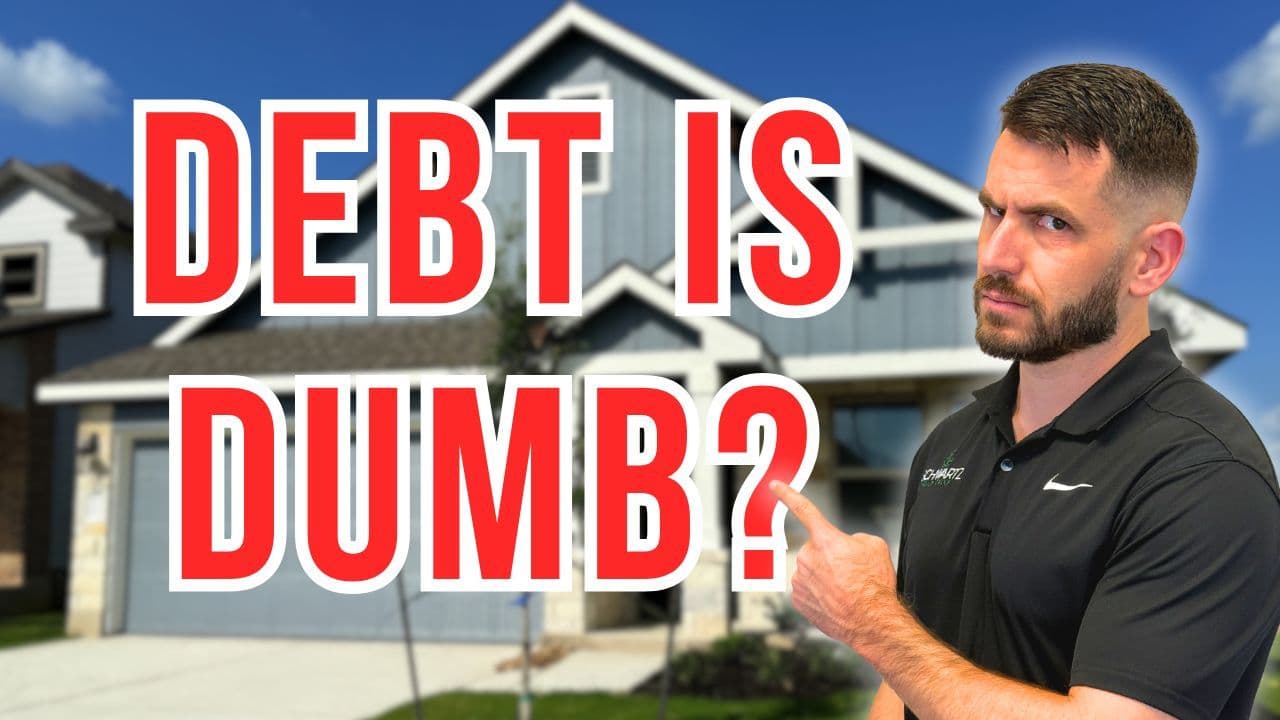
Why Debt Is the Biggest Risk for Real Estate Investors
And How to Protect Your Portfolio
When I started investing in real estate in Bryan and College Station,
Texas, I thought I had it all figured out. Leverage was my friend,
appreciation would grow my wealth, and cashflow was secondary. I
had seen the math: put less money down, buy more properties, and let
rising home values do the heavy lifting. Over time, however, I’ve
learned a hard lesson—debt is the enemy.
The $200,000 Case Study
To illustrate, let’s look at a simple scenario: a $200,000 rental
property and a very real…very scary..very large maintenance expense:
- Over-leveraged: A buyer puts most of the money down through
loans. Cashflow is break-even—or slightly negative. Now imagine a
major repair hits, like a new roof or an HVAC system. That one
unexpected $15,000 expense could wipe out the investor. They
might have to raise additional funds, refinance, or even sell the
property. If all their properties are highly leveraged, that’s a
domino effect that could destroy an entire portfolio, leaving the
investor to start over from scratch.
- Cash Buyer: The same property purchased with cash generates
roughly $12,000–$15,000 in annual cashflow. When a major repair
occurs, it might turn the year into a break-even scenario, but the
investor survives and continues growing their portfolio. The
difference between these two approaches is striking: one person
loses almost everything, while the other experiences only a minor
setback.
To illustrate, let’s look at a simple scenario: a $200,000 rental
property and a very real…very scary..very large maintenance expense:
Risk Vs. Reward: The Hard Truth
Many new investors focus on return on investment (ROI) or
appreciation, often ignoring the hidden cost of risk. Over-leveraging
may look smart on paper—it can amplify your gains when the market is
rising—but it also magnifies your losses when reality hits.
This is exactly the point Dave Ramsey emphasizes: risk is the silent
killer of wealth. Over a long enough time horizon, risk—not lack of
appreciation—is what causes investors to lose their portfolios. By
managing your debt and prioritizing cashflow, you stay in the game
long enough to take advantage of compounding and long-term market
appreciation
Real World Lessons from BCS
In my own portfolio here in Bryan and College Station, I’ve faced over
$100,000 in unplanned maintenance costs over five years. Some
highlights include:
- Roof replacements on multiple properties. $5,000-10,000 each
- Several HVAC replacements. $7,000-8,000 each
- Water heater replacements and other mechanical systems. $1,500
each - A recent $36,000 repair to exterior stairs across three fourplexes.
These weren’t small, optional projects—they were essential to keeping
tenants safe and properties rentable. Without strong cashflow and a
measured approach to leverage, any one of these expenses could have
forced me to sell a property or refinance under less-than-ideal
conditions.
Balancing Leverage and Cashflow
Does that mean I never use debt? No. I still leverage some of my
properties to grow my portfolio faster—but only at a level that keeps
cashflow strong and risk manageable. The goal isn’t to eliminate debt
entirely; it’s to use it wisely so one repair or unexpected expense
doesn’t jeopardize everything.
For investors in Bryan, College Station, or similar markets, this lesson
is particularly important. Markets can fluctuate, interest rates can rise,
and maintenance costs are real. A strategy focused solely on growth
and high leverage may look impressive on paper, but in the real world,
it can put your entire portfolio at risk.
Key Takeaways
- Debt amplifies risk. Over-leveraging may increase ROI in the short
term but threatens long-term survival.
2. Cashflow is king. Strong cashflow allows you to weather repairs,
vacancies, and market downturns.
3. Time is your ally. By minimizing risk and staying invested, you give
appreciation and compounding the opportunity to work for you.
4. Plan for the unexpected. Real-world maintenance costs are
significant—don’t assume appreciation alone will save you.
About Greg Schwartz
Marine veteran and founder of Schwartz Realty Group
Free Real Estate Calculators
Run the numbers on a Bryan College Station property with our free tools.