
Buying a House "AS-IS" in Bryan & College Station: What It Really Means (And What It Doesn't
This blog post clarifies the "AS-IS" clause in Texas residential real estate contracts for the Bryan-College Station market. It explains common misconceptions between buyers and sellers, details the buyer’s rights during the option period, and warns against the risks of "retrading."

Greg Schwartz
August 28, 2026
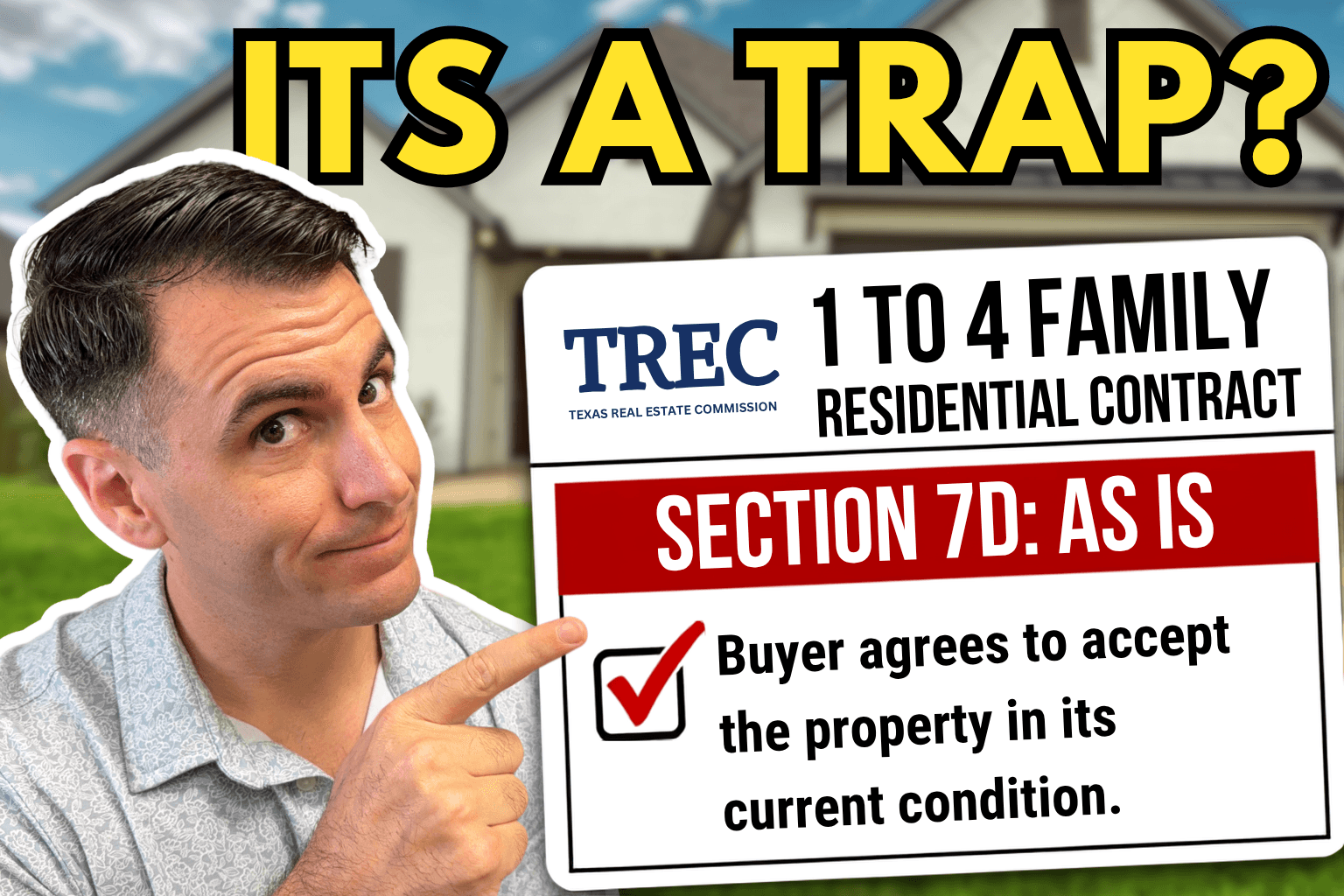
Buying a House "AS-IS" in Bryan & College Station: What It Really Means (And What It Doesn't)
In real estate, there are two words that are so simple but so commonly misunderstood that I had to make a whole video—and now a blog post—about it. Today, we're diving deep into the "AS-IS" paragraph in a Texas residential contract.
Whether you're buying or selling in Aggieland, I'm going to guess that you either misunderstand or are misinterpreting this paragraph. As a real estate agent who's been doing this for 6 years, helping hundreds of people buy and sell right here in Bryan and College Station, I see it all the time. Almost every single transaction comes to a point of frustration, and it hinges entirely on this understanding of what AS-IS actually means.
Let's break down what buyers think it means, what sellers think it means, what it really means, and how some buyers abuse this clause.
The Great Misunderstanding: Buyers vs. Sellers
When you write an offer on a house, you're going to come to Paragraph 7, where you either pick that the property is being purchased AS-IS, or AS-IS with specific repairs.
What Buyers Think: If you check just the AS-IS box as a buyer, you might think you are buying the property literally as-is, meaning no matter what you find, you have to buy this house. You start sweating, thinking, "What if we get the inspection and the foundation is crumbling?" A lot of buyers get nervous about this check box because they assume there's no out.
What Sellers Think: If you're a seller and you receive an offer with the AS-IS box checked, you probably have the understanding that the buyer is going to buy the house no matter what. You think, "They checked AS-IS, so they're taking it no matter what they find during an inspection because they told me they're buying it as is".
Both sides have it wrong.
What the Texas 1-4 Residential Contract Actually Says
Let’s look at exactly what is written into the Texas 1-4 residential contract verbatim. We are talking about Paragraph 7, sub-paragraph D:
"Acceptance of property condition AS-IS means the present condition of the property with any and all defects and without warranty except for the warranties of title and warranties in this contract."
Okay, that confirms our basic understanding: it’s the current condition of the property. But it goes on:
"Buyer's agreement to accept the property as is under Paragraph 7D (1) or (2) does not preclude the buyer from inspecting the property under Paragraph 7A, from negotiating repairs or treatments in a subsequent amendment, or from terminating this contract during the option period, if any."
The Unrestricted Right to Walk Away
What this is saying is that, yes, AS-IS means you are making an offer based on the current condition of the house, but you still get an inspection. If you negotiated for an option period, you still have an unrestricted right to walk away from that property.
Let's assume you walked a pristine-looking house in a Bryan neighborhood, but the inspection report points out a huge crack going through the foundation that is actually sloping and getting worse. Because you couldn't see this during the walkthrough, you can go back to the seller and say, "I didn't know there was a foundation issue, you didn't disclose it, and now we have to have a discussion about what this means for our agreement".
You have three options:
- Option 1: Ask the seller to repair it.
- Option 2: Negotiate a credit or a decrease in price.
- Option 3: Walk away completely.
Whether you get a repair, a credit, or walk away, you still have that option during your option period because it's an unrestricted right. You absolutely can renegotiate on items you find during your inspection.
The Dirty Word in Real Estate: Retrading
Because you have this unrestricted right, some buyers try to take advantage of the AS-IS clause. In the real estate industry, this is called "retrading," and it is a dirty word. Honestly, if you become a retrader, you're branded as a guy who negotiates in bad faith.
Here’s what retrading looks like in practice: Let's say you walk a house and realize the AC is falling apart. The air filter is caked in dog hair, the data plate shows the unit is 25 years old, and the seller even disclosed its age. You know there's an issue with the AC, but you want to make a competitive offer to get it accepted. So, you make an offer as if the AC was brand new.
You know full well that the inspector is going to recommend a full replacement because it uses old Freon. When the report comes back, you go to the seller acting shocked: "Oh my god, the AC is falling apart, I can't pay that price!"
What you're doing is bringing to light something you already knew before you went under contract, and you're trying to negotiate the price down as a result.
Why Retrading is a Shortsighted Strategy
Beating up the seller like this might get you a better price in a short period of time, but it is a very shortsighted approach because you are going to burn three massive bridges:
- The Seller: If you're an investor, good luck buying any of his other property.
- The Listing Agent: They now think you're a prick, which matters in a tight-knit market like Bryan/College Station.
- Your Buyer's Agent: Agents like myself are trying to build a reputation in town for working with reputable buyers and investors. Retrading burns your agent's reputation right alongside yours.
The people who retrade usually have short lives in the investing space. In fact, the richest investors I know never retrade. They make offers and make it easy to close.
Are you looking to build long-term wealth through real estate? Before you submit an offer, ensure your numbers make sense. Run your potential deals through our Rental Property Calculator to see your true ROI and factor in realistic repair budgets.
How to Negotiate the Right Way
If you are looking to buy a house, I recommend that you make an honest offer based on everything you know about that house from your walkthrough and the seller's disclosure. Be upfront and transparent about the items you are factoring into your offer.
Tell the seller, "I understand the roof is on its last leg, which is why my offer price is $5,000 to $10,000 under your asking price". That is an honest way to negotiate upfront.
Then, if you find something during the option period that wasn't disclosed or you couldn't otherwise see, 100% bring it up. We do that all the time. But if you know about it before you make the offer, you better factor that into your original offer price and terms. Otherwise, you're going to be labeled as a retrader, and nobody wants that.
Let's Connect
Misunderstanding something as simple as the AS-IS paragraph causes frustration, and frustration leads to people backing out of deals. When buyers and sellers are reading different sheets of music, great deals fall apart.
If you want to work with a team that negotiates with integrity and knows the Bryan/College Station market inside and out, we’re here to help you grow your wealth through real estate.
Ready to get started? Shoot us an email at info@schwartzrealtygroup.com or crunch your investment numbers using our Rental Property Calculator. Let's find your next great property together.
About Greg Schwartz
Marine veteran and founder of Schwartz Realty Group
Free Real Estate Calculators
Run the numbers on a Bryan College Station property with our free tools.